I left Cisco to run a farm. It taught me more about product than I expected
In technology, you can sometimes spend weeks or months discussing whether something is working. On the farm, you often know very quickly.
Turns out, the farm didn’t care about my roadmap.
For more than 11 years, I worked in complex technology.
UX design. Enterprise software. Network assurance. Data platforms. Observability. Technical product management.
I spent a lot of time thinking about systems, dependencies, users, priorities, and what happens when something goes wrong.
Then I left.
Not to join another company.
I moved to a small farm in the Czech countryside.
For a while, my daily standup wasn’t with engineering teams.
It was with a herd of goats.
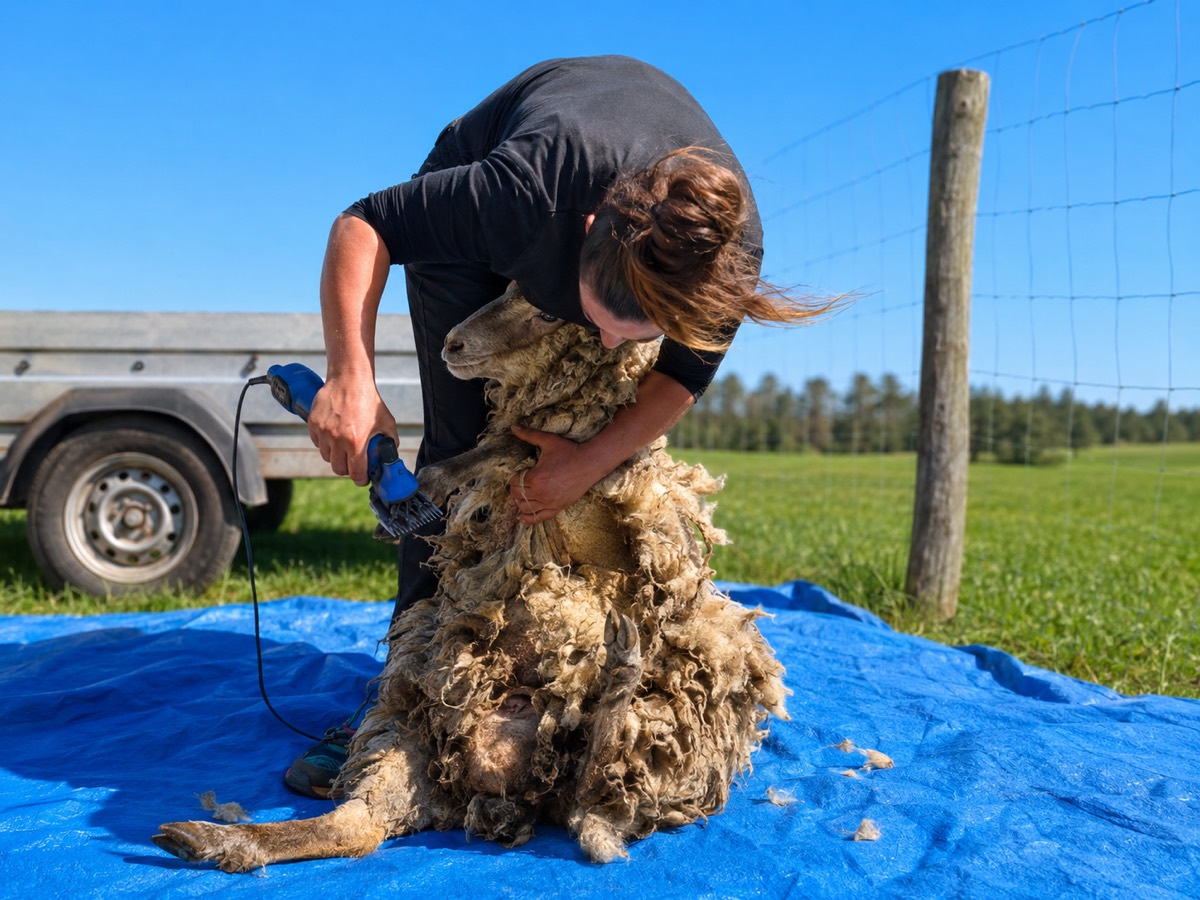
I milked them. I made goat cheese. I planted and harvested crops. I looked after chickens. I learned how to shear a sheep.
And I discovered something slightly uncomfortable:
The farm didn’t care about my roadmap.
The weather didn’t care about my priorities.
The goats definitely didn’t care about my carefully thought-out plans.
Reality just happened.
And I had to pay attention.
The feedback loop was much shorter
In technology, you can sometimes spend weeks or months discussing whether something is working.
On the farm, you often know very quickly.
A small change in temperature could ruin a batch of cheese.
A fence could break.
An animal could get sick.
A crop could fail.
There wasn’t much room for convincing yourself that everything was fine because the PowerPoint looked good.
The result was right there in front of you.
That changed how I think about feedback.
Not as a ceremony. Not as something you schedule into a process.
Just as something you need to notice.
And act on.
You don’t control the system. You work with it.
This was probably the biggest lesson.
A farm is a system of things you can’t fully control.
Weather. Animals. Soil. Seasons. Timing. Resources.
You can plan. You can prepare. You can build some resilience into the system.
But eventually, something will happen that wasn’t in your plan.
Technology isn’t so different.
Neither are teams.
Neither are customers.
You can have the perfect product strategy, roadmap, process, or framework and still find yourself dealing with a completely different reality three weeks later.
The answer isn’t always to find a better framework.
Sometimes you need to understand the situation better.
Who is involved? What has changed? What are the actual constraints? What does the customer need right now? What can the team realistically do? What happens if we wait?
The solutions are always contextual.
The thinking travels well.
And you learn to pay attention to small signals
Running a farm made me much more observant.
You notice when something looks slightly different.
An animal behaving strangely.
A change in the weather.
A crop developing differently than expected.
A process that normally works suddenly producing a different result.
You learn not to ignore those signals.
I’ve always cared about this in product work, probably because I started in UX.
Good product decisions rarely come from having all the answers.
They come from noticing what is actually happening, asking better questions, understanding the people involved, and being willing to change your mind.
That matters even more when the product is technically complex.
When you’re working with engineers as your primary users.
When the architecture creates real constraints.
When customers are putting pressure on the team.
When the roadmap, the business, the technology, and the user experience are all pulling in different directions.
That’s the kind of product work I enjoy.
The messy kind.
So, yes. I’m back in tech.
I’m launching my Product Management Coaching and Strategic Advisory practice for people working at that messy intersection of technology, customers, UX, and product decisions.
I’m especially interested in senior and technical PMs, engineering leads, and teams building complex products where there isn’t a neat playbook to follow.
I don’t think my time on the farm gave me a new product framework.
It gave me something more useful:
A better appreciation for context.
For consequences.
For paying attention.
And for accepting that sometimes the smartest thing you can do is stop trying to control everything and look carefully at what is actually happening in front of you.
Turns out, that’s pretty useful in product too.
And yes, after all those years in tech, I can also make a pretty decent goat cheese.